We are currently taking on new NHS and private patients. If you are happy with the service that we provide we will be delighted to look after any of your family, friends or colleagues that you recommend to us.
‘Frequently Asked Questions’ Category
5 Tips for a healthy mouth and smile
Tip 1:
Brush your teeth twice a day with an electric rechargeable tooth-brush and use a mirror and go systematically to ensure you clean all areas using a fluoride toothpaste.
Tip 2:
Interdental cleaning with either dental floss/tape or tepe brushes Is essential once a day as normal tooth brushing cannot access areas between teeth well so these areas are more prone to gum disease
Tip 3 :
Reduce the amount of artificial sugars in your diet to reduce the cause of tooth decay. This means reduce or stop cakes, chocolates, sweets and fizzy drinks. Find healthier alternatives. Definetly no sugary foods before going to bed. Remove the number of sugary episodes throughout the day also.
Tip 4 :
Visit our dentists regularly to monitor your risk of tooth decay and gum disease, health of your teeth and gums and for regular oral cancer screening. Clients who visit our dentists regularly have been shown to have healthier, whiter smiles and keep their teeth for longer. They see us every 3 months for hygiene visits to keep their teeth for life.
Tip 5 :
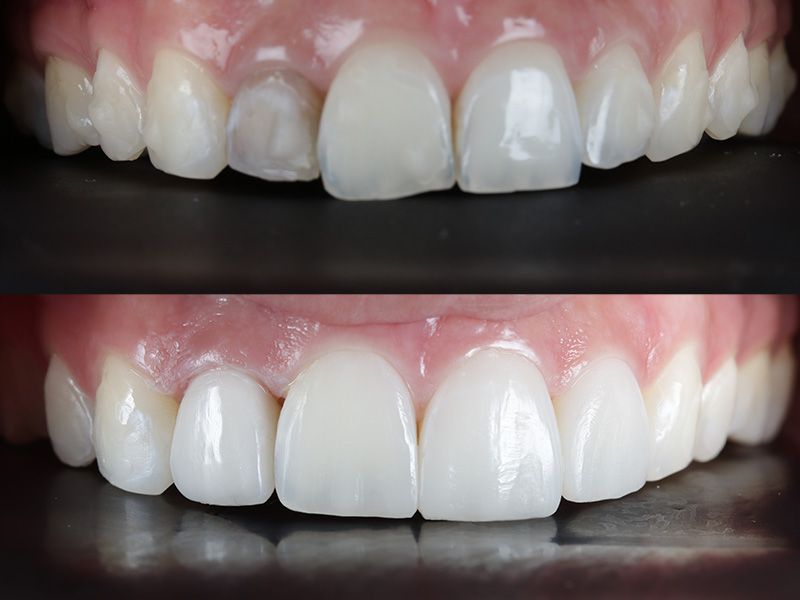
Once we have kept your teeth healthy with tips 1-4, to keep your teeth feeling and looking healthy and for a lovely smile consider getting your teeth professionally whitened by our dentists. This is the simplest and easiest way for a smile makeover. Just 5-7 nights wear of our special night time whitening system will guarantee your teeth look healthy, natural and whiter without standing out and looking false. Continue wearing the system for 2 weeks and you can expect a stunning whiter smile.
We currently have a special offer on our professional teeth whitening. Buy one get second half price for a limited time over Christmas. Why not treat yourself and your friend or relative this Xmas? Offer available when you book from now till Christmas day. Call 0147453719 for more information or to book an appointment
Rik has just returned from a 3 day advanced course in advanced dental implant procedures in Frankfurt, Germany.
There he observed live surgery involving the most advanced procedures to treat patients with missing and failing teeth.
Patients attended with insufficient bone in areas requiring dental implants to replace missing teeth.
In the back part of the upper jaw a procedure called a sinus augmentation/graft procedure was carried out. This involved accessing and lifting the upper jaw sinus lining and placing an artificial graft material and occasionally simultaneous implant placement. The graft material encourages natural bone formation and this is allowed to heal with implant placement for about 6 months.
The best form of graft material is natural bone from the patient in another part of the mouth. In other areas with bone deficiency natural bone was taken either from the chin or back part of the lower jaw and fixated to the deficiency and allowed to heal. After 3-4 months this bone usually heals and corrects the deficiency to enable implant placement.
Where there were deficiencies making the area for implant placement too thin advanced procedures were learnt to expand the ridge avoiding a bone graft to allow simultaneous implant placement. Likewise where there were small deficiencies in bone height in the back part of the upper jaw simple techniques were observed to increase the height for simultaneous implant placement.
All in all a great 3 day experience which will benefit those of our patients with missing teeth, dentures and failed bridgework and crowns greatly in achieving fixed naturally looking and functioning teeth.
“I’ve been taking an antibiotic an hour before my dental procedures for years and now all of a sudden i’ve been told that i don’t need to take it anymore……..why?
This is a typical question that we get asked from patients who were used to taking precautionary antibiotics.
Dentistry like other professions is constantly evolving therefore procedures and techniques change overtime depending on research and findings from governing bodies, such as The National Institute for Health and Clinical Excellence (NICE).
NICE set out new recommendations stating that “In the past, people at risk of infective endocarditis (infection in which the lining of the heart becomes inflamed) Â have been offered antibiotics when they have certain dental procedures. NICE is recommending a change in practice, so now you should only be offered antibiotics if the procedure is at a site where there is suspected infection. This is because dental procedures are no longer thought to be the main cause of endocarditis, and taking antibiotics carries its own risks.”
Should you have any worries or concerns regarding this information please do not hesitate to contact the practice.
Also you may consult your GP or hospital consultant as some situations may require you to continue taking antibiotic cover based on their advice.
Reducing the intake of antibiotics when not nescesary reduces the higher incidence of serious allergy reactions and antibiotic drug resistance.
What is finance and what are the benefits of it?
Finance is an option available to patients where they can obtain a credit amount for the full amount of your investment in your dental care and that is paid back in monthly instalments to the finance company.
Who is eligible?
Just about anyone over the age of 18. You don’t have to belong to a private dental plan and you don’t have to be a regular patient at Parrock Street Dental Care.
What can I use the loan for?
You can use the loan to pay for most dental work, but its particularly suited to more costly private treatments, such as dental implants, orthodontics, aesthtic or cosmetic work. If you’re not sure whether it’s right for treatment than please speak to your dentists or our lovely receptionists who will be happy to help you.
How much can i borrow?
Typically between £500 and £25,000 depending on the course of treatment. This will be subject to an ‘on-the-spot’ credit check. Most patients’ applications are approved there and then, so you can go ahead and schedule treatment immediately.
How do i repay the loan?
Much like any other loan, you repay it in affordable monthly payments over an agreed term. These payments are collected by Direct Debit.
How much will I pay?
You pay the cost of your treatment- no more and no less. Interest-free means just that. However there are many different options that allow you to pay back over an even longer period of time that does have a low interest rate. You can choose whatever option best suits you.
What are the repayment terms?
Your dentist or dental team member will be able to go through the various terms with you and agree the most suitable repayment period.
How do I apply?
Once you’ve agreed on a course of treatment- and a cost- with your dentist, medenta will make a credit application on your behalf. As soon as the credit check is complete and loan processed, you’ll receive written confirmation from the credit provider. Simple as that!
If you would like any further information than please phone 01474 537191 to speak to one of our reception team members.
When having an extraction, patients will always be given written and verbal advice on how to maintain the extraction site for a speedy recovery. Please find below the main points that should be followed:
It is common for an extraction site to continue oozing blood for the first 24 hours. You are recommended to apply pressure over the site with a bite pack/ clean cotton cloth or rolled hankie and bite hard for 20min.
Do not rinse or spit out for 24 Hours- as rinsing and spitting can wash away blood clots and lead to further bleeding which can delay healing.
Be careful, not to burn or bite your lips/cheeks due to the anaesthesia, it can take up to 2-3 hours before the anaesthesia wears off- Â it is recommended you eat/drink once the numbness has worn off.
It is sometimes good to take pain relief before the anaesthesia has worn off. Any type of painkiller such as Paracetamol or Ibuprofen can be taken…however you should check your suitability for any drugs. Avoid taking aspirin based painkillers as this can encourage bleeding.
Avoid smoking as smoking can increase the risk of infection and delays healing.
Avoid alcohol and strenuous exercise as both can lead to bleeding and delayed healing.
Mouthwash (corsodyl/retardex) and brushing the following day should be carried out as normal however hot salt water mouthwashes (1 cup : 1 teaspoon of salt) can be used in addition after every meal to help encourage the extraction site to remain clean.
Should an extraction site increase in pain after 2-3 days, this may indicate a dry socket and you should make an appointment to see your dentist by calling the practice on 01474 537191.
It is very important to invest in a good toothbrush to help maintain effective brushing and prevent gum disease. There are so many toothbrushes on the market, it can be difficult to know what to buy. We advise that any electric rechargeable toothbrush will suffice.
There are 5 simple steps that you can use for effective brushing.
1. Always look in a mirror whilst brushing. It sounds so simple but many people do not use a mirror and hence cannot see where they are brushing and so miss cleaning certain areas.
2. Use a methodical approach, concentrating on one tooth at a time.
3. Make sure that you brush the outside, inside and biting surfaces of the teeth.
4. Try to begin brushing in a different place everyday to ensure that you do not neglect any particular area.
5. Toothbrushing should last for at least two minutes (A good tip is, if you listen to the radio in the morning you should brush for the duration of 1-2 songs).
Flossing techniques
Some people say that they spend a long time brushing their teeth and therefore they do not need to floss, this is not the case. Although the bristles of a tooth brush are fine, collectively they are still to thick to get in-between the teeth effectively. It is very easy to forget that teeth have more than two surfaces and they all need the same care and attention, especially as food can get trapped in-between teeth and if left it can cause decay/ carries/cavities. The only way to remove this is by flossing.
1. Take about 50cm (20inches) of floss and wind the ends around your middle fingers, leaving a short distance between them.
2. Using your thumb and first finger, gently move the floss between your teeth and wrap in a C shape around the tooth.
3. Guide the floss to where the tooth meets the gum, but take care not to damage the gum by flossing too vigorously
4. Then move the floss up and down the tooth. During use the floss spreads out for more effective plaque removal.
Inter-dental Brushes
Inter-dental brushes are small pocket sized brushes that are available to buy in different sizes. A dentist would recommend what size is best for the pateint, and some people are advised to use two different sized brushes corresponding to the size of the gaps between teeth. Tepe brushes are great as they come with a lid and can be kept in your pocket incase you are going out for a meal and you have a tendency to get food trapped in certain areas.
For the ultimate feeling of a fresh mouth, don’t forget to use a tongue scraper  as your tongue  harbours many bacteria that can cause bad breath.
Should you need any further advise on brushing and flossing techniques, speak to one of our team members who will be happy to help you.